Starting a Productive Off-Grid Garden: What Actually Grows Best (2026 Update)
Hands-on guide to starting a productive off-grid garden: best crops that thrive with minimal inputs (kale, potatoes, tomatoes, berries & more), soil building, site tips, tools, companion planting, pest control, and preservation. Real advice for resilient, high-yield self-sufficiency.
FOOD & SELF-SUFFICIENCY
Live Off The Grid Contributor
6 min read
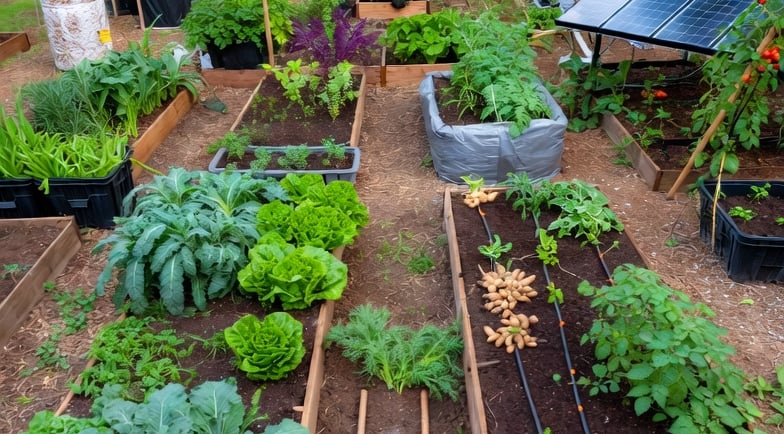
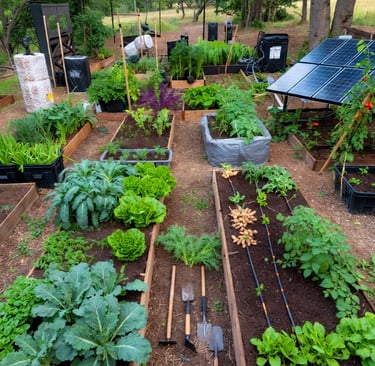
I've been tending my off-grid garden for close to a decade now, and if there's one thing I've learned the hard way, it's that not everything you plant is going to thrive when you're cut off from the conveniences of city life. No quick trips to the nursery for miracle fertilizers, no endless water from a hose hooked to municipal lines—just you, the soil, the sun, and whatever seeds or starts you've got on hand. Back when I first started, I lost an entire row of tomatoes to a surprise frost because I didn't plan for the microclimates on my property. It was a tough lesson, but it turned me into someone who obsesses over what actually grows best in an off-grid setup.
If you're reading this, maybe you're in that spot too—dreaming of fresh veggies straight from the earth, reducing your reliance on grocery stores, or even turning your garden into a full-blown food source for your homestead. Off-grid gardening isn't just about throwing seeds in the dirt; it's about resilience, efficiency, and picking plants that give you the most bang for your limited resources. In this guide, I'll walk you through everything I've picked up over the years: from soil prep and site selection to the absolute best crops that perform in real-world conditions. We'll cover perennials that keep giving year after year, fast-growing annuals for quick wins, and even some under-the-radar picks that handle drought, shade, or poor soil like champs.
By the end, you'll have a blueprint to start your own productive garden that could feed you through tough times. (Quick note: Some links here are affiliate links—if you buy through them, I get a small commission at no extra cost to you. I only recommend gear I've used or vetted myself, like heirloom seeds from reliable suppliers.)
Why Go Off-Grid with Your Garden?
Let's start with the big picture. Off-grid gardening means self-sufficiency: no pesticides from the store (or at least minimizing them), water from rain or wells, and fertility from compost you make yourself. It's empowering, but it's also practical in 2026, with supply chains still shaky from recent disruptions and food prices climbing. A well-planned garden can yield hundreds of pounds of produce per season, slashing your food bill and boosting your health with nutrient-dense, homegrown eats.
But here's the reality check—it's not all sunshine and salads. You'll deal with pests that seem to multiply overnight, soil that might be more rock than dirt, and weather that doesn't care about your plans. The key is choosing plants that are forgiving, high-yield, and adapted to your zone. I focus on USDA hardiness zones 3-10 here, since most off-gridders fall in that range, but always check your local zone (you can find free maps online).
One of my first successes was a patch of kale that overwintered and kept producing greens through spring. It taught me to prioritize hardy, multi-season crops over finicky ones like eggplant, which demands perfect conditions I couldn't always provide without grid power for heaters or lights.
Site Selection: The Foundation of Your Garden
Before you plant a single seed, pick the right spot. I've wasted seasons on bad locations, so learn from my mistakes. Aim for at least 6-8 hours of direct sunlight daily—south-facing slopes are ideal if you've got them. Test your soil pH (kits are cheap; aim for 6.0-7.0 for most veggies) and drainage. Soggy roots kill more plants than drought.
If your land is sloped, terrace it with logs or rocks to prevent erosion. For flat areas, raised beds are a game-changer—they warm up faster in spring, drain better, and let you control the soil mix. I build mine from untreated lumber or salvaged materials, filling with a 50/50 compost/topsoil blend.
Water access is crucial off-grid. Position near your rainwater setup or well to minimize hauling. And don't forget wind protection—fences or hedgerows of sunflowers or corn can shield tender plants.
Soil Building: Turning Dirt into Gold
Off-grid means no bags of potting mix from the hardware store, so build your soil naturally. Start with a soil test (mail-in kits from extension services are worth it). Most off-grid land is depleted, so amend with what you've got: leaves, kitchen scraps, animal manure (aged to avoid pathogens).
Composting is non-negotiable. I run a hot pile with greens (veggie scraps, grass clippings) and browns (leaves, cardboard) in a 1:2 ratio. Turn it weekly, and in 2-3 months, you've got black gold. For nitrogen boosts, plant cover crops like clover or vetch in off-seasons—they fix nitrogen from the air.
If your soil is clay-heavy, add sand and organic matter; sandy? More compost to hold moisture. Mulch everything—straw, wood chips, or grass clippings—to suppress weeds and retain water. In my setup, mulching cut my watering needs by half.
Essential Tools for Off-Grid Gardening
You don't need fancy gadgets, but a few reliable tools make life easier. My must-haves:
- Hand Trowel and Fork: For planting and weeding. Go stainless steel for durability—I like the Fiskars set (link: [Fiskars Garden Tools].
- Hoe and Rake: For soil prep. A broadfork aerates without tilling, preserving soil structure.
- Pruners: Sharp ones for harvesting and trimming. Bypass style works best.
- Watering Can or Drip System: Solar-powered pumps if you have electricity; otherwise, gravity-fed from elevated tanks.
- Seed Starting Trays: Reuse yogurt containers or buy biodegradable pots to start indoors.
Invest in quality once—cheap tools break when you need them most.
Best Vegetables for Off-Grid Gardens
Now, the meat of it: what actually grows best. I've trialed dozens, and these are the winners—easy, productive, and resilient.
Leafy Greens: The Backbone
Greens are foolproof for beginners. They grow fast, tolerate shade, and pack nutrition.
- Kale: My top pick. Varieties like Lacinato (dinosaur kale) handle cold snaps and heat. Plant in spring/fall; harvest outer leaves for continuous yield. One plant can give 10-20 pounds over a season.
- Swiss Chard: Rainbow varieties add color. Grows in poor soil, bolts slow in heat. Cut-and-come-again harvesting.
- Spinach: Bolt-resistant types like Bloomsdale. Succession plant every 2 weeks for steady supply.
- Lettuce: Loose-leaf over head types for easier harvest. Romaine or butterhead in partial shade.
These need minimal space—grow in containers if land is limited.
Root Vegetables: Storage Stars
Roots store well without refrigeration, perfect off-grid.
- Potatoes: High-yield (10-20 pounds per plant). Grow in towers or bags to save space. Yukon Gold or Russets are reliable.
- Carrots: Nantes or Danvers for straight roots in rocky soil. Thin seedlings early.
- Beets: Dual-purpose—greens and roots. Detroit Dark Red matures fast.
- Radishes: Quickest crop (3-4 weeks). Use as companions to deter pests.
Hill them up for better drainage.
Fruiting Vegetables: High-Reward Crops
These take more effort but deliver big.
- Tomatoes: Indeterminate heirlooms like Cherokee Purple for flavor. Stake them; mulch heavily. In cooler zones, start indoors.
- Peppers: Bell or hot—jalapeños are prolific. Heat-lovers, so full sun.
- Zucchini/Squash: One plant floods you with fruit. Compact bush varieties for small spaces.
- Beans: Bush beans for quick harvest; pole for vertical growth on trellises.
Watch for blight—rotate crops yearly.
Cucurbits: Vining Wonders
- Cucumbers: Burpless or pickling. Trellis to save space and reduce rot.
- Pumpkins/Winter Squash: Butternut stores for months. Plant on mounds.
Best Fruits for Off-Grid Orchards
Fruits take time but pay off long-term.
- Berries: Strawberries (everbearing for extended harvest), blueberries (acid soil lovers—amend with pine needles), raspberries (self-propagating).
- Fruit Trees: Dwarf varieties like apples (Honeycrisp), pears, or plums. Plant pollinator pairs.
- Grapes: Concord for juice/jelly. Train on arbors.
Start with established plants from nurseries like Perfect Plants Nursery
Herbs: Flavor and Medicine
Herbs are low-maintenance powerhouses.
- Basil: Annual, but prolific. Pinch tops for bushiness.
- Mint: Invasive—grow in pots. Great for tea.
- Oregano/Thyme: Perennials, drought-tolerant.
- Garlic: Plant cloves in fall for summer harvest.
Dry extras for winter use.
Perennials and Long-Term Crops
For sustainability, focus on perennials—they return yearly with less work.
- Asparagus: Beds last 20+ years. Harvest spears in spring.
- Rhubarb: Tart stalks for pies. Cold-hardy.
- Artichokes: Globe type for zones 7+.
- Jerusalem Artichokes: Tubers like potatoes but perennial.
Companion Planting and Succession Strategies
Boost yields with companions: Tomatoes with basil (pest repellent), carrots with onions (deters flies). Avoid bad pairs like potatoes and tomatoes (share diseases).
Succession plant: Sow greens every 2-3 weeks. Intercrop fast growers (radishes) with slow (cabbage).
Pest and Disease Management Off-Grid
No chemicals? No problem. Use neem oil sprays (affiliate: [Neem Oil](https://affiliate-link.com/neem)), diatomaceous earth for slugs, row covers for insects. Encourage beneficials like ladybugs.
For diseases, rotate, space plants, and remove infected parts.
Watering and Irrigation Tips
Conserve with drip lines or ollas (clay pots buried for slow release). Mulch thickly. Collect rainwater—integrate with your harvesting system.
Harvesting and Preserving Your Bounty
Harvest early morning for crispness. Preserve via canning, dehydrating (solar dehydrators work great), or fermenting. Root cellars for storage.
Scaling Up: From Small Plot to Food Forest
Start small (100 sq ft), expand as you learn. Eventually, layer in permaculture: trees over shrubs over herbs/veggies.
Common Mistakes and How to Fix Them
Overplanting—start modest. Ignoring soil health—test and amend. Poor watering—inconsistent kills roots.
Final Thoughts on Your Off-Grid Garden Journey
Building a productive garden off-grid is trial and error, but the rewards—fresh food, peace of mind—are unmatched. Pick hardy crops, build soil, and adapt. What's your first plant? Share in comments.