Off-Grid Home Security: Low-Tech and High-Tech Options for Remote Properties (2026 Update)
Layered 2026 guide to off-grid home security for remote properties: low-tech fences, dogs, signs & traps + high-tech solar cameras, motion sensors & smart locks. Real setups, costs & tips to deter intruders & wildlife.
SECURITY & DEFENSE
Live Off The Grid Contributor
6 min read
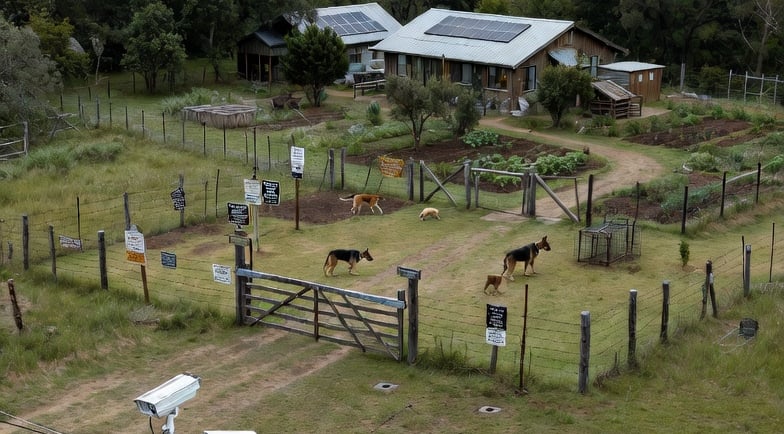
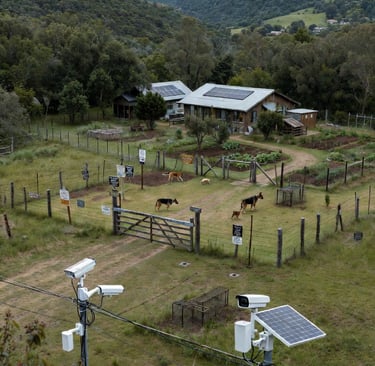
I've been living off-grid for over a decade now, tucked away on a piece of land that's more wilderness than neighborhood, and if there's one thing that's kept me up at night—literally—it's figuring out how to keep my place secure without relying on the kind of setup you'd find in a suburban cul-de-sac. Back when I first moved out here, I had this naive idea that being remote meant I was invisible. Wrong. One night, I woke up to the sound of rustling outside my cabin, and it turned out to be a couple of curious bears rummaging through my trash. But it could have been worse—people. That scare got me serious about security, blending old-school tricks with some smarter tech that runs on solar and doesn't need a constant grid connection.
Remote properties like mine are magnets for trouble sometimes: opportunistic thieves looking for tools or fuel, wildlife that doesn't care about property lines, or even the occasional lost hiker who turns into an unwanted guest. Off-grid means no quick 911 response, no streetlights, and often no neighbors within shouting distance. So, your security has to be proactive, layered, and reliable even when the power's spotty or the weather's brutal. In this guide, I'm sharing everything I've learned from trial, error, and talking to other homesteaders—low-tech options that cost next to nothing, high-tech gear that's evolved a lot by 2026 with better batteries and AI, and how to mix them for a setup that actually works.
Whether you're in a tiny cabin, a yurt, or a converted shipping container, the goal is deterrence first, detection second, and response as a last resort. I'll break it down with real examples from my setup and others, pros/cons, costs (updated for 2026 inflation and supply chain realities), and recommendations. (Full transparency: Some links are affiliates—if you buy through them, I get a small cut at no extra cost to you. I only suggest stuff I've used or seen hold up in the field, like solar cameras from Reolink or locks from Master Lock.)
The Unique Challenges of Off-Grid Home Security
Living remote isn't like securing a city apartment. No ADT van rolling up for installation, no Ring doorbell with cloud backups (unless you hack it with satellite internet), and power is precious—every watt counts when you're running off solar or a generator. Wildlife adds another layer: Bears, coyotes, or even feral hogs can trip motion sensors or tear through fences, leading to false alarms that drain batteries or your sanity.
From my experience, the big threats are:
- Human intruders: Thieves targeting generators, solar panels, tools, or stored food/fuel. In rural areas, meth cooks or squatters sometimes scout abandoned-looking properties.
- Animals: They can damage structures, eat gardens, or pose direct risks (I've had a close call with a bobcat).
- Environmental factors: Storms knocking out cameras, extreme cold freezing locks, or heat warping plastic components.
A good system addresses all this with redundancy—low-tech as the foundation (cheap, no power needed), high-tech for early warnings (but solar-powered to stay off-grid). Budget-wise, you can start under $500 for basics and scale to $2,000+ for advanced setups. Key principle: Deterrence over confrontation. Make your place look occupied and hard to breach, and most problems avoid you.
Low-Tech Security Options: Simple, Effective, and Power-Free
I started with low-tech because it's what I could afford and install myself. These are the classics—proven over centuries, adapted for modern homesteads. They're passive, low-maintenance, and don't fail when batteries die.
1. Perimeter Fencing and Gates
Nothing says "stay out" like a solid fence. On my property, I went with a 6-foot chain-link around the core area, topped with barbed wire for extra bite. For larger land, electric fencing (solar-charged) deters animals and people.
- Best Pick: Gallagher Solar Electric Fence Kit
- Why it works: Solar panel keeps it charged, delivers a non-lethal zap. Covers up to 5 miles.
- Pros: Easy DIY install, effective against deer/bears/thieves, low draw (under 1W).
- Cons: Needs occasional weed clearing to avoid shorts, initial cost ~$300–$600 for 1/4 mile.
- Real story: A neighbor had coyotes raiding his chickens until he set this up—no losses since. I use a similar setup for my garden.
- Alternative: Barbed Wire or No-Climb Mesh
- Cheaper, but more labor to install. Pair with a locked gate (heavy-duty padlock like Maudex® PML65 Professional Grade Padlock.)
2. Signs and Visual Deterrents
Psychological warfare at its finest. "No Trespassing," "Beware of Dog," or "Armed Response" signs make people think twice. I added fake camera domes (~$10 each) and motion-activated lights (solar LED) to bluff tech presence.
- Top Choice: Solar Motion Lights (Ofuray Of-15000W Solar Street Light)
- Pros: 120-degree detection, waterproof. Lights up like daytime without grid power.
- Cons: Battery life drops in winter (replace every 2–3 years).
3. Dogs and Livestock Guardians
My mutt, Buddy, is the best alarm system—barks at anything unusual. For serious protection, get a livestock guardian dog (LGD) like Great Pyrenees or Anatolian Shepherd. They patrol, deter predators, and bond with your family.
- Pros: 24/7 vigilance, companionship, natural deterrent.
- Cons: Food/training costs (~$500/year), not for everyone.
- Tip: Train with positive reinforcement; combine with fencing.
4. Locks, Bolts, and Window Bars
Secure doors/windows with deadbolts (Kwikset or Schlage), security bars for sliding doors, and window pins. For sheds/garages, use heavy hasps and padlocks.
- Pros: Weatherproof, keyed alike option for multiple locks.
- Cons: Can freeze in cold—use graphite lubricant.
5. Traps and Alarms (Non-Lethal)
Tripwires with noise makers (cans on string), or bear bangers for wildlife. For people, gravel paths crunch underfoot, giving audio cues.
These low-tech layers cost under $500 total and form 80% of my defense—reliable, no tech failures.
High-Tech Security Options: Solar-Powered Smarts for Remote Monitoring
Once low-tech is in place, high-tech adds eyes and ears. In 2026, solar tech is cheaper and more efficient—better lithium batteries, AI motion detection that ignores animals, and integration with Starlink for remote viewing.
1. Solar Security Cameras
Wireless cameras with solar panels mean no wiring hassles. Look for 4K resolution, night vision, two-way audio, and cloud/local storage.
- Top Pick: Reolink Argus 4 Pro
- Specs: 4K, 2K spotlight, solar panel included, 122-degree view, PIR motion sensor.
- Pros: No monthly fees (SD card storage), AI distinguishes people/vehicles/animals, app alerts via WiFi/Starlink. Battery lasts weeks between charges.
- Cons: Needs good sun exposure; setup app can be finicky.
- Real use: Caught a fox near my coop—scared it off with the spotlight from my phone. Homesteaders love the durability in rain/snow.
- **Alternative: Eufy S330—4K, pan-tilt
2. Motion Sensors and Alarms
Solar-powered sensors trigger lights/sirens or notify your phone.
- Best: YoLink Outdoor Motion Sensor
- Pros: LoRa long-range (up to 1/4 mile), works with hubs for smart integration, weatherproof.
- Cons: Needs hub (~$50 extra).
- Price: ~$40.
3. Smart Locks and Access Controls
Battery-powered locks like August or Schlage Encode—solar-rechargeable batteries extend life.
- Pick: Schlage Encode Smart WiFi Deadbolt
- Pros: App control, keyless entry, integrates with Alexa.
- Cons: WiFi needed (use Starlink).
4. Drones for Patrol
In 2026, affordable drones like DJI Mini 5 Pro with solar charging stations for aerial surveillance.
- Pros: Quick perimeter checks, live feed.
- Cons: Learning curve, regulations in some areas.
5. Satellite Internet for Remote Monitoring
Starlink ties it all together for app alerts anywhere.
High-tech setup: $500–$1,500, but saves on potential losses.
Integrating Low-Tech and High-Tech for Maximum Protection
My system: Fences with sensors, dogs with cameras overlooking their run, signs backed by real alarms. Layer like an onion—outer deterrence (fences/signs), middle detection (sensors/cameras), inner response (locks/alarms).
Setup tips:
- Power: All solar—panels + batteries for 3–5 days autonomy.
- Placement: Cameras high to avoid tampering, sensors at chokepoints.
- Testing: Monthly drills—simulate intrusions.
Product Reviews and Recommendations
Diving deeper into specifics:
- Reolink Go PT Plus (Cellular Camera): For no-WiFi areas, uses 4G. Pros: Pan-tilt, solar, SIM card alerts. Cons: Data plan extra.
- Arlo Go 2: Similar, but better app.
For low-tech: FarmTek Electric Fence—reliable for livestock too.
Maintenance and Troubleshooting
Check batteries quarterly, clean lenses, test fences. In Florida humidity (like my spot), use silica packs in electronics.
Common mistakes: Over-relying on tech (batteries fail), ignoring wildlife (false alarms), poor placement (blind spots).
Legal Considerations for Off-Grid Security
Know your state's laws—booby traps illegal, guns for defense vary. In Florida, castle doctrine applies, but document everything.
Personal Stories and Lessons Learned
One time, my camera caught a guy snooping—turned out to be a lost hunter. Siren scared him off without confrontation. Another, dogs chased off raccoons saving my garden.
Security gives peace of mind—lets you enjoy the solitude.
Final Thoughts
Off-grid security is about balance—low-tech for reliability, high-tech for convenience. Start simple, scale as needed. What's your setup like? —let's share tips.
Stay safe out there.