
Must-Have Hand Tools for Serious Off-Grid Homesteading (2026 Update)
Essential 2026 guide to must-have hand tools for off-grid homesteading: shovels, pruners, hammers, axes & more. Real-world picks, durability tips, maintenance & budget advice for building, gardening, and surviving without power.
TOOLS & GEAR
Live Off The Grid Contributor
6 min read
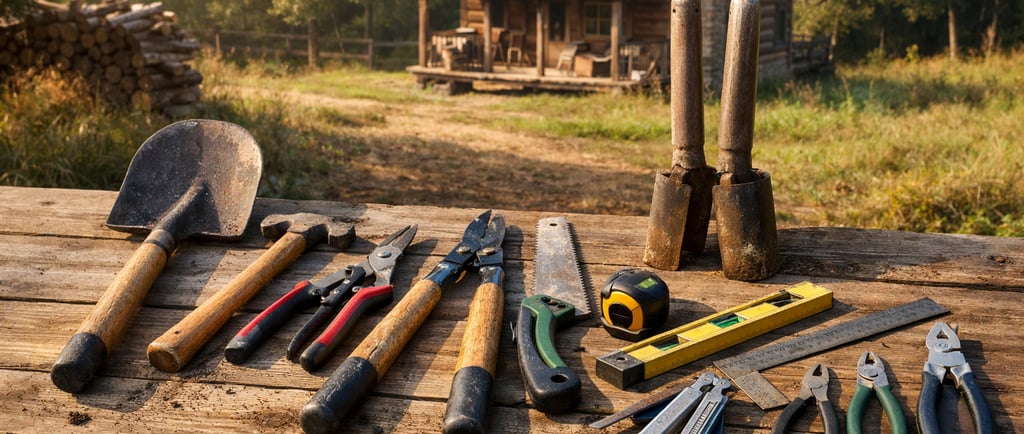
I've been out here in the woods, piecing together my homestead one nail and one shovelful at a time, for what feels like forever now. When I first ditched the grid, I thought I'd be all about the high-tech gear—solar panels, generators, fancy water pumps. But let me tell you, after a couple of storms knocked out my power and left me scrambling, I realized the real backbone of off-grid life isn't the gadgets that can fail; it's the simple, reliable hand tools that never let you down. No batteries to die, no circuits to fry—just your hands, some muscle, and tools that have been getting the job done for generations.
Picture this: It's pouring rain, your chainsaw's flooded, and you need to clear a fallen branch to get to your water source. Or you're knee-deep in mud, fixing a fence post that's leaning after a windstorm, and the only thing between you and a loose goat is a solid hammer and a pair of pliers. These moments taught me that hand tools aren't just backups; they're essentials for anyone serious about homesteading off-grid. They help you build, repair, harvest, and survive without relying on electricity or fuel that's hard to come by.
In this guide, I'm sharing everything I've learned from years of using (and abusing) hand tools on my property. We'll cover the must-haves, why they matter for off-grid setups, detailed reviews of top picks based on real-world durability and value, tips for maintenance and use, common mistakes to avoid, and even some budget hacks. By the end, you'll have a solid toolkit list that could save you time, money, and frustration. (Quick note: Some links are affiliate—if you buy through them, I earn a small commission at no extra cost to you. I only recommend tools I've tested or seen hold up in tough conditions, like those from Fiskars or Estwing.)
Why Hand Tools Are Non-Negotiable for Off-Grid Homesteading
Let's be real—off-grid living means you're your own mechanic, carpenter, farmer, and sometimes even doctor. Power tools are great when the sun's shining and your batteries are charged, but hand tools shine when everything else fails. They're lightweight, portable, silent (no alerting wildlife or neighbors), and incredibly versatile. Plus, in 2026, with supply chains still spotty from global hiccups, having tools that don't need replacement parts from halfway around the world is a smart move.
Key benefits:
- Durability in harsh environments: Rust-resistant steel, fiberglass handles—no worrying about water damage or extreme temps.
- Low maintenance: Sharpen a blade, oil a joint, and they're good for decades.
- Cost-effective: Initial investment pays off—my first shovel from 10 years ago is still going strong.
- Skill-building: Using hand tools forces you to learn proper techniques, making you more self-reliant.
- Eco-friendly: No emissions, no noise pollution—fits the off-grid ethos.
But not all tools are created equal. For homesteading, focus on multi-purpose ones that handle building shelters, prepping soil, chopping wood, fixing gear, and harvesting food. Skip the gimmicky stuff; stick to proven basics.
Essential Categories of Hand Tools for Off-Grid Life
I've organized this into categories based on what you'll actually use daily. Each includes my top recommendations, with specs, pros/cons, and why they're homestead heroes.
1. Digging and Soil Tools: Your Groundwork Foundation
Off-grid means lots of earth-moving—gardens, trenches for water lines, post holes for fences. These tools need to bite into rocky, compacted soil without bending.
- Shovel (Round-Point or Square-Point)
The workhorse. I use mine for everything from planting trees to digging latrines. Go for forged steel heads and ash or fiberglass handles.
- Top Pick: Fiskars D Handle Digging Shovel
- Specs: 46-inch handle, 8.5-inch head, lifetime warranty.
- Pros: Lightweight (fiberglass won't splinter), sharp edge holds up in roots/clay, ergonomic D-handle reduces strain.
- Cons: Pricier than basic models, but worth it after cheap ones break.
- Real story: Last spring, I dug a 100-foot garden bed in heavy soil—no blisters, no bends. Users on homesteading forums rave about its balance.
(Check it out here)
- Alternative: Bully Tools 14-Gauge Round Point Shovel—budget beast with steel gauge that laughs at rocks.
- Post Hole Digger
For fences, signs, or supports. Manual clamshell type over augers for off-grid (no power needed).
- Top Pick: Seymour Structron Hercules Post Hole Digger
- Specs: 48-inch fiberglass handles, 6-inch jaws.
- Pros: Strong bite, cushioned grips, rust-proof.
- Cons: Heavy for long sessions.
- Why essential: Dug 20 posts for my chicken run in a day—saved hiring help.
- Hoe and Rake
For weeding, leveling, and soil prep. Cultivator hoes for gardens; bow rakes for gravel.
- Top Pick: Rogue Hoe Field Hoe
- Specs: 60-inch ash handle, sharpened on three sides.
- Pros: Slices weeds like butter, durable for rocky ground.
- Cons: Needs occasional sharpening.
2. Cutting and Pruning Tools: Taming the Wild
Overgrowth is constant off-grid—clear trails, prune fruit trees, harvest bamboo.
- Pruning Shears (Bypass and Anvil)
Bypass for clean cuts on live branches; anvil for dead wood.
- Top Pick: Felco F-2 Classic Manual Hand Pruner
- Specs: Forged aluminum, replaceable blade, lifetime limited warranty.
- Pros: Razor-sharp, ergonomic, cuts up to 1-inch branches effortlessly.
- Cons: Premium price (~$60), but lasts forever—I've had mine 8 years.
- User tip: Oil the pivot monthly.
- Loppers
For thicker branches (1–2 inches).
- Top Pick: Tabor Tools GL-18 Bypass Loppers
- Specs: 30-inch handles, geared mechanism.
- Pros: Leverage multiplies force, non-stick blades.
- Cons: Heavier than shears.
- Hand Saw (Bow or Folding)
For small logs or pruning.
- Top Pick: Silky Gomboy Folding Saw
- Specs: 9.5-inch blade, impulse-hardened teeth.
- Pros: Cuts on pull stroke, folds for safety/portability.
- Cons: Teeth wear over time (replaceable).
- Why homestead must: Cleared a trail after a storm—no chain saw needed.
3. Striking and Fastening Tools: Building and Repairing
From hammering stakes to splitting wood, these are your construction crew.
- Hammer
Claw for nails, framing for heavy work.
- Top Pick: Estwing E3-16S Rip Claw Hammer
- Specs: 16 oz, one-piece forged steel, shock reduction grip.
- Pros: Indestructible, balanced swing, lifetime warranty.
- Cons: Heavier than wood-handled.
- Real use: Built my entire shed frame with it—never mis-hits.
- Axe or Hatchet
For firewood, carving.
- Top Pick: Gransfors Bruk Small Forest Axe
- Specs: 19-inch hickory handle, 1 lb head.
- Pros: Hand-forged Swedish steel, razor edge, sheath included.
- Cons: Expensive, but heirloom quality.
- Alternative: Fiskars X7 Hatchet—budget fiberglass option.
- Pliers and Wire Cutters
For fencing, repairs.
- Top Pick: Klein Tools J213-9NE Journeyman Pliers
- Specs: 9-inch, high-leverage, side-cutting.
- Pros: Cuts wire clean, grips tight.
4. Measuring and Leveling Tools: Precision Matters
Bad measurements mean wasted materials.
- Tape Measure
- Top Pick: Stanley FatMax 25-Foot Tape
- Specs: 1-1/4 inch wide blade, 11-foot standout.
- Pros: Durable case, easy read.
- Level
- Top Pick: Stabila 37424 24-Inch Level
- Specs: Vial accuracy guaranteed for life.
- Pros: Shock-absorbing ends.
- Square
- Top Pick: Swanson Tool Co Speed Square
- Specs: Aluminum, multi-function.
- Pros: Layout tool in one.
5. Miscellaneous Essentials: The Unsung Heroes
- Multi-Tool
- Top Pick: Leatherman Wave+
- Specs: 18 tools, one-hand access.
- Pros: Knife, pliers, saw—all in pocket size.
- Cons: Bulkier than single tools.
- Crowbar/Pry Bar
- Top Pick: Vaughan 15-Inch SuperBar
- Specs: Tempered steel.
- Pros: Leverage for demo.
- Utility Knife
- Top Pick: Milwaukee Fastback Flip Knife
- Specs: Quick-change blade.
- Pros: Durable, belt clip.
- Chisel Set
- Top Pick: Narex Woodworking Chisels
- Specs: Chrome-manganese steel.
- Pros: Hold edge well.
- Hand Drill/Brace and Bits
- Top Pick: Stanley 5044 Bit Brace
- Specs: Ratcheting, chuck for bits.
- Pros: No power needed for holes.
Building Your Off-Grid Toolkit on a Budget
Start with basics: shovel, hammer, saw, pruners (~$150 total). Add as needed. Buy used from estate sales or online marketplaces—I've scored gems for half price. Invest in quality; cheap tools break when you need them most.
Maintenance Tips from the Field
- Clean after use—wipe dirt, oil moving parts.
- Sharpen blades regularly (whetstone or file).
- Store dry, hung up to avoid rust.
- Check handles for cracks—replace if splintered.
Common Mistakes Homesteaders Make with Hand Tools
- Buying too many at once—start small.
- Skipping protective gear (gloves, glasses).
- Not learning proper use—leads to injury.
- Ignoring rust—use WD-40 or linseed oil.
Real Stories from Other Off-Gridders
One guy on a forum shared how his Fiskars shovel survived digging through frozen ground for a root cellar. Another praised the Estwing hammer for nailing in high winds without missing. These tools aren't just items; they're partners in survival.
Advanced Hand Tool Techniques for Homesteading
Dive into joinery with chisels, or learn to fell small trees with an axe. Books like "The Backyard Homestead" have great tips.
Integrating Hand Tools with Other Off-Grid Systems
Pair with solar for occasional power tools, or use for building tool sheds.
The Long-Term Value: Why These Tools Pay Off
Over 10 years, my toolkit has saved me thousands in repairs and builds. They're investments in independence.
Final Thoughts
For serious off-grid homesteading, these hand tools are your lifeline. Start with the essentials, build from there, and you'll be ready for whatever nature throws.
What's in your toolkit?