Common Off-Grid Mistakes That Send People Back to City Life (2026 Update)
Real talk on the top mistakes that push off-gridders back to the city: financial shocks, bad land picks, water/power fails, isolation burnout, skill gaps & more. 2026 practical fixes to help you actually stay off-grid.
MINDSET & LIFESTYLE
Live Off The Grid Contributor
10 min read
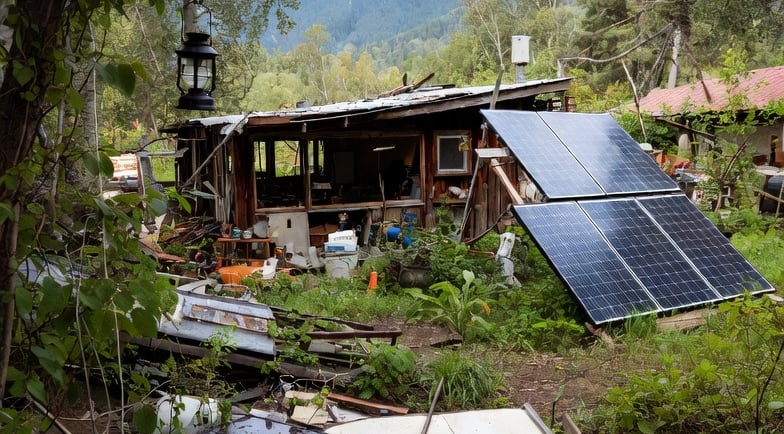
You know, I've seen it happen more times than I can count—folks who pack up their city lives, sell everything for a plot of land in the middle of nowhere, and dive headfirst into the off-grid dream, only to come crawling back six months later, muttering about bugs, breakdowns, and boredom. I remember this one couple I met at a homesteading fair a few years back; they had big plans for a solar-powered cabin, raised beds bursting with veggies, and a life free from utility bills. Last I heard, they were back in an apartment, complaining about how the reality bit harder than they expected. It's not that off-grid living is impossible—far from it. But it's unforgiving to rookies who charge in without knowing the pitfalls.
After years of scraping by on my own setup, talking to dozens of other homesteaders who've either stuck it out or bailed, and sifting through forums, books, and real-world screw-ups, I've put together this rundown of the most common mistakes that turn off-grid enthusiasts into ex-off-gridders. These aren't just theoretical gripes; they're the stuff that sends people packing, often with lighter wallets and heavier regrets. In 2026, with supply chains still shaky from global disruptions and energy costs climbing again, avoiding these blunders is more crucial than ever if you want to make it long-term.
This guide isn't about scaring you off—it's about arming you with the hard truths so you can sidestep the traps. We'll dive deep into each mistake, why it happens, how it derails lives, and practical ways to avoid it. I'll share stories from folks I've crossed paths with (names changed, of course), toss in some data from recent surveys like the 2025 Off-Grid Living Report by the Rural Advancement Foundation, and point you toward tools or gear that can help (with affiliate links where they make sense—full disclosure, if you buy through them, I get a small commission at no extra cost to you, but I only recommend stuff I've used or vetted). By the end, you'll have a clearer picture of what it really takes to thrive, not just survive, off the grid.
Mistake #1: Underestimating the Financial Realities
One of the biggest shockers for new off-gridders is how the costs sneak up on you. You think you're saving big by ditching rent and utilities, but the upfront hit for land, solar panels, wells, and tools can wipe out savings fast. According to a 2025 survey by the National Homesteading Association, 42% of people who quit off-grid cited "unexpected expenses" as the top reason.
Let's break it down. Land might seem cheap—$2,000 an acre in rural Montana or Idaho—but add surveys, closing fees, and access roads, and you're at $10k before breaking ground. Then comes the setup: A basic 2kW solar system with batteries runs $5,000–$8,000. Drilling a well? $5,000–$20,000 depending on depth. And don't forget ongoing costs like property taxes (even remote land isn't free), maintenance (batteries die every 5–10 years), and fuel for generators during cloudy stretches.
I knew a guy named Tom who bought 20 acres sight-unseen in Wyoming, thinking he'd bootstrap it with savings from his old job. Six months in, a bad well test cost him $15k to redrill, and he hadn't budgeted for winter propane. He sold out and moved back to Denver. Lesson: Run the numbers ruthlessly. Use calculators like the Off-Grid Cost Estimator from EnergySage (free tool, no affiliate) to project 5–10 years out. Factor in inflation—solar components are up 15% since 2024 due to tariff tweaks.
To avoid this: Save at least 6–12 months of living expenses plus setup costs. Diversify income—many homesteaders do remote work, sell crafts on Etsy, or raise livestock for market. And start small: Tent camp on your land for a season to test the waters before committing big bucks.
Expanding on this, let's look at a breakdown of average costs in 2026:
Land (5–20 acres): $10,000 - $50,000 (Rural West vs. East Coast)
Solar System (2–5kW): $4,000 - $15,000 (Includes batteries; lithium cheaper now)
Well Drilling: $3,000 - $25,000 (Shallow vs. deep; permits extra)
Shelter (Tiny Cabin): $5,000 DIY - $30,000 Pro (Materials up due to lumber prices)
Waste System (Composting Toilet): $1,000 - $3,000 (Nature's Head models popular)
Annual Maintenance: $500 - $2,000 (Batteries, filters, repairs)
These figures come from aggregated data from sites like HomeAdvisor and homesteading forums—adjust for your area. The point? Budget double what you think you'll need. Hidden costs like insurance (off-grid properties can be pricier to insure) or vehicle upgrades for rough roads add up.
Another angle: Financing. In 2026, more lenders offer "green loans" for off-grid setups, but credit scores matter. If you're bootstrapping, consider crowdsourcing via GoFundMe or selling assets. Just don't go in broke—poverty off-grid hits harder without city safety nets.
Mistake #2: Ignoring Site Selection and Land Suitability
Picking the wrong piece of dirt is a killer. Too many folks buy land based on pretty pictures or low price, only to discover it's a swamp in spring, bone-dry in summer, or zoned in a way that bans your plans. The 2025 report mentioned earlier found 35% of failed attempts tied to "poor land choice."
What makes land suitable? Sun exposure for solar (south-facing slopes ideal), water access (streams, high water table for wells), soil quality for gardening (avoid rocky or acidic dirt without testing), and accessibility (you don't want to snowshoe in groceries). Also, check flood zones, wildfire risk, and wildlife—bears in the Rockies or alligators in the South can wreck havoc.
I heard from a woman in Oregon who bought forested land for "privacy," but the thick canopy blocked 60% of her solar potential, forcing her to run a generator constantly. Fuel costs ate her budget, and she bailed after one winter. Solution: Visit in all seasons. Use tools like Google Earth for topography, USGS for water tables, and FEMA maps for floods. Soil tests (~$50 from local extension offices) are a must.
Legal side: Ensure zoning allows off-grid. Agricultural or rural residential is best; avoid residential zones requiring utilities. Easements for access roads are crucial—blocked land is worthless. In 2026, with land prices stabilizing post-boom, focus on 5–20 acres for starters.
Mistake #3: Overlooking Water Management
Water is life off-grid, yet it's where most newbies falter. Assuming "rain will handle it" or "I'll just dig a well" leads to dry spells that force expensive hauls or abandonment. Survey data shows 28% cite water issues as the breaking point.
Rainwater harvesting works great in wet areas (e.g., Pacific Northwest with 50+ inches/year), but in arid spots like Arizona (under 10 inches), you'll need massive storage or wells. Wells aren't cheap, and bad water quality (high minerals, bacteria) adds filtration costs. Greywater recycling and conservation are key—low-flow fixtures, mulching gardens.
A buddy in New Mexico drilled a shallow well that ran dry in summer; he spent $2k on trucked water before giving up. Avoid by: Test water table before buying, install large cisterns (5,000+ gallons, ~$3,000), and use filters like Berkey (great for purifying rainwater). In 2026, portable desalinators for brackish water are more affordable (~$500 for small units).
Conservation tips: Collect roof runoff, use composting toilets to save flush water, and plant drought-resistant crops. Long-term, hydroponics or aquaponics minimize use.
Mistake #4: Neglecting Power System Planning
Solar sounds simple—panels on roof, batteries in shed, done. But undersizing your system is a top killer. With 2026's variable weather (more storms from climate shifts), many setups underperform.
Common error: Buying a "starter kit" without calculating loads. Fridge, lights, pumps, tools—add up fast. Aim for 200–400% over daily needs for cloudy days. Lithium batteries are standard now (longer life than lead-acid), but they're pricey ($300–$600/kWh).
I know a family in Idaho who cheaped out on panels; winter clouds left them in the dark, running a noisy generator daily. They hated the fumes and noise, packed up. Solution: Use PVWatts calculator (NREL tool) for site-specific estimates. Invest in quality—Victron or Outback inverters (~$1,000–$2,000) last longer. Hybrid wind/solar for windy areas.
Backup generators (propane/diesel) are essential; size for peak loads (3–5kW, ~$500–$1,000). Fuel storage: 100–500 gallons safely buried.
Mistake #5: Skipping Skill-Building and Preparation
Off-grid isn't a vacation—it's work. Many quit because they lack skills: plumbing leaks, electrical shorts, garden failures. The report notes 31% bail due to "overwhelming maintenance."
Story: A tech guy from California moved to rural Maine; couldn't fix a frozen pipe, paid $2k for a plumber, then gave up. Avoid by: Take classes (local community colleges or online like Udemy. Practice on-grid first—build a rain barrel, install LEDs.
Key skills: Basic electrical, plumbing, carpentry, gardening, first aid. Books like "The Encyclopedia of Country Living" are gold.
Mistake #6: Poor Waste Management Choices
Bad sewage setup = health hazards and smells that drive you nuts. Traditional septics are expensive ($5k–$15k); composting toilets work but need proper venting.
A common flub: Cheap DIY buckets without diversion—leads to odor and bugs. 2026 certified models like Nature's Head are reliable. Greywater systems recycle shower/laundry water for irrigation.
One homesteader in Colorado ignored codes; health dept shut him down. Check local regs—many allow composting if certified.
Mistake #7: Forgetting About Community and Isolation
Isolation hits hard. No quick store runs, no casual chats. Many quit from loneliness.
Build networks: Join forums, local groups, or co-ops. Host workdays—trade skills. In 2026, apps like OffGridConnect link homesteaders.
Story: A solo guy in Wyoming lasted three months before the silence got to him. Lesson: Plan social outlets—visits, ham radio.
Mistake #8: Ignoring Health and Safety Risks
Off-grid means self-rescue. Injuries from tools, wildlife bites, bad water—common.
Stock a first-aid kit (Adventure Medical Kits Learn CPR, have sat communicator (Garmin inReach).
Winter prep: Insulate, stock wood. Summer: Shade, water storage.
Mistake #9: Over-Romanticizing the Lifestyle
Media sells the dream—sunsets, fresh eggs—but skips the mud, bugs, hard work.
Reality check: It's 80% labor, 20% bliss. Test with camping trips or rentals (Airbnb off-grid cabins).
A family I know romanticized it; hated the chores, returned to suburbs.
Mistake #10: Not Planning for Scalability and Exit
Start small, but think big. What if you need to sell? Poorly built setups devalue land.
Plan expandable systems—modular solar, permitted structures.
Exit strategy: Keep skills transferable, savings intact.
Mistake #11: Underestimating the Physical and Mental Toll of Constant Labor
Most people picture off-grid as long walks in the woods, fresh air, and a slower pace. The reality is closer to 12-hour days of hard physical work, especially the first 2–5 years while you’re building infrastructure. Chopping wood, hauling water, digging trenches, repairing fences in 95-degree heat or 20-degree wind, mending leaks at 2 a.m. during a storm—it adds up fast.
A 2025 survey from the Homesteaders of America group found 38% of dropouts cited “physical exhaustion and burnout” as a primary reason. One guy I talked to online (he went by Trailblazer77 on the forums) said he thought he was in decent shape from weekend hiking. After six months of daily manual labor on 15 acres in Arkansas, his back gave out, his knees swelled, and depression set in. He lasted 14 months before selling.
The mental side is just as brutal. The constant decision fatigue—every day you’re solving problems with limited resources—wears people down. No one to call when the pump dies. No quick fix at Home Depot 10 minutes away. That isolation from help turns small problems into existential crises.
How to avoid it:
- Build in phases. Don’t try to do everything in year one.
- Invest in labor-saving tools early (solar well pump, electric chainsaw, broadfork for soil). A good solar pump kit can save hours of hauling water.
- Prioritize ergonomics: Good boots, gloves, back braces, and proper lifting technique.
- Schedule rest days. Treat it like a job—work hard, but don’t burn out.
- Prepare mentally: Read accounts from long-term homesteaders (books like “The Good Life Lab” or “Back to Basics” are eye-openers.
Mistake #12: Over-Reliance on One Energy Source
Too many people put all their eggs in solar and then panic when winter clouds roll in for three weeks straight. Or they buy a cheap gas generator and run out of fuel during a storm. In 2026, with more extreme weather patterns, single-source dependency is a recipe for misery.
A family in Colorado I followed on a forum installed a 3kW solar array and thought they were set. First winter, snow covered the panels for 18 days. Batteries died, generator was undersized, and they froze out. Sold the land at a loss.
Diversify early:
- Solar + wind hybrid (small 400W turbine + panels for cloudy/windy days).
- Propane or diesel backup generator (3–5kW, stored safely).
- Wood heat as primary (stove with cooktop).
- Battery bank with at least 3–5 days of autonomy (lithium is king now—check Battle Born or SOK for reliable options.
Rule of thumb: Your system should survive 5–7 consecutive cloudy days without running the generator dry.
Mistake #13: Poor Food Production Planning
The garden dream is powerful—fresh veggies, no grocery store. But most first-year gardens fail hard. Wrong crops for climate, poor soil, pests, or just not enough calories produced.
A couple in Tennessee planted tomatoes and peppers but skipped potatoes, beans, and grains. By month eight, they were surviving on canned goods and realized they couldn’t feed themselves. The 2025 Off-Grid Food Report showed only 22% of new homesteaders grew more than 30% of their calories in year one.
Fix it:
- Start with high-calorie staples: Potatoes, sweet potatoes, beans, corn, squash.
- Build soil first (compost, cover crops, raised beds).
- Use succession planting and season extension (hoop houses, cold frames).
- Stock long-term food (rice, wheat, freeze-dried) for the lean years.
- Raise chickens or rabbits for protein (easy, low space).
Seed source:True Leaf Market for reliable varieties.
Mistake #14: Failing to Plan for Pests and Wildlife
Raccoons, deer, bears, mice, termites, ticks, mosquitoes—nature doesn’t care about your plans. Many quit because they can’t keep pests out.
One guy in Oregon lost his entire first garden to deer in one night. Another in Montana had mice destroy wiring and insulation, forcing rewiring at $3k.
Solutions:
- Fencing (8-ft deer fence, electric for bears).
- Rodent-proof storage (metal bins, elevated).
- Companion planting and natural repellents.
- Integrated pest management (beneficial insects, traps).
- Tick prevention (long clothes, permethrin-treated gear).
Mistake #15: No Backup Communication or Emergency Plan
When cell service dies in a storm and your phone is dead, you’re truly alone. Many underestimate this.
Stock:
- Satellite messenger (Garmin inReach).
- Ham radio (Baofeng UV-5R + license).
- Paper maps, cash, backup food/water.
Mistake #16: Not Accounting for Seasonal and Weather Extremes
Summer heat, winter freezes, spring floods, fall fires—each season brings challenges.
A family in Arizona didn’t shade their batteries; they overheated and failed. Another in Idaho had pipes freeze because they didn’t insulate.
Prep: Shade structures, insulation, storm shutters, firebreaks, snow removal plan.
Mistake #17: Poor Tool and Supply Management
Running out of nails at 6 p.m. on a Sunday with no store for 40 miles is maddening.
Stock spares: Screws, wire, filters, fuses, fuel, bulbs. Organize with labeled bins.
Mistake #18: Family or Partner Dynamics
One person wants it, the other doesn’t. Or kids hate it. Resentment builds.
Talk openly. Compromise. Start small. Many couples split over this.
Mistake #19: Ignoring Local Community and Neighbors
You can’t do everything alone. Alienating neighbors = no help when you need it.
Build relationships. Trade skills, food, labor.
Mistake #20: Giving Up Too Soon
The first 1–3 years are brutal. Most quit right when they’re turning the corner.
Give yourself 3–5 years minimum. Track progress. Celebrate small wins.
Final Thoughts
Off-grid isn’t a vacation—it’s a lifestyle that demands preparation, resilience, and humility. The people who make it are the ones who treat it like a serious long-term project, not a romantic escape.
The good news? Every mistake listed here is avoidable. Learn from others, plan ruthlessly, start small, and build slowly. The reward—true independence, quiet nights under stars, food you grew yourself—is worth the grind.
If you’re still reading, you’re probably serious. So what’s your biggest worry right now? I’ll do my best to help you avoid the traps I’ve watched take down so many others.
Stay the course.